225 Signatures
15,000 for collection target
Petition addressed to: Committee on Petitions (Petitionsausschuß)
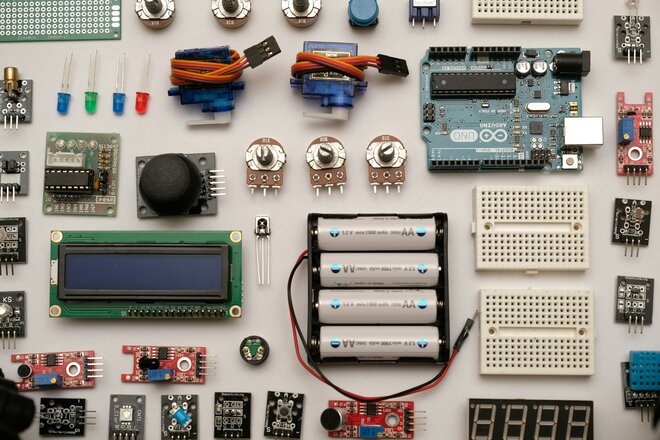
We demand an exemption, a consolidated tariff category, or a flat-fee cap for private (B2C) imports of electronic, mechanical, and general prototyping components into the European Union. The current regulation chhttps://taxation-customs.ec.europa.eu/news/guidance-and-legal-text-temporary-flat-fee-low-value-imports-which-will-apply-until-1-july-2028-2026-06-08_enarging €3 per individual HS-code category is unintentionally destroying STEM education, the broader maker community (including 3D printing and robotics), and early-stage hardware innovation in Europe.
Reason
Since July 1, 2026, the EU has introduced a flat €3 fee per product category (defined by the 6-digit HS code) on B2C imports. While this was designed to stop the flood of cheap fast-fashion and plastic goods, it accidentally penalizes the entire European hardware, robotics, and maker ecosystem.
To understand the absurdity of this law, imagine buying a €15 Lego car from abroad. Under this new regulation, customs now says: "We charge a €3 fee for the red bricks, €3 for the blue bricks, €3 for the tires, and €3 for the axles." You suddenly pay €12 in processing fees for a €15 toy. This is exactly what is happening to prototyping components, from microcontrollers to ball bearings.
Building a simple automated mechanism (like a smart blind actuator or a small robot) requires a mix of highly specialized electronic and mechanical parts that are often completely unavailable from B2C distributors within the EU. We are forced to buy from international specialized distributors. A standard order for one simple prototype now triggers a catastrophic chain of fees based on HS codes.
For a bag of mixed parts worth maybe €15, a student or hobbyist is now charged €24 in flat customs fees alone. Together with VAT, a €15 educational project now costs over €40. This is a 200%+ tax on innovation.
The Impact on Europe
- Killing STEM Education: Students, apprentices, and hobbyists can no longer afford to build, learn, and prototype across disciplines like electronics, mechanics, and robotics.
- Stopping Innovation: Hardware startups begin in home labs. Cross-disciplinary prototyping has now become financially ruinous for private individuals in the EU.
- No local Alternatives: We cannot "buy local" because the vast inventories of highly specialized prototyping components simply do not exist in the EU B2C market. We are being penalized for something we cannot avoid.
We urge the EU to introduce an amendment to this regulation to save European hardware innovation.
Thank you so much for your support, Michael Deutschl, Bärnbach
Share petition
Petition details
Petition started:
16 Jul 2026
Collection ends:
01/15/2027
Region:
European Union
Topic:
Taxes
This petition has been translated into the following languages
Translate this petition now
Add a new language versionWhy people sign
Tools for the spreading of the petition.
You have your own website, a blog or an entire web portal? Become an advocate and multiplier for this petition. We have the banners, widgets and API (interface) to integrate on your pages. To the tools
Share petition
Petition statistics
Supporters by country
| Country | number | quorum (?) |
|---|---|---|
| Österreich | 32 | 0.22% |
| Deutschland | 30 | 0.04% |
| Italia | 20 | 0.04% |
| Polska | 15 | 0.04% |
Signature distribution



I am a computer engineer. I really care about protecting our planet from excessive e-waste. I am always taking care of a random device that stopped working and doing my best to fix it with what I have or what I can find. Unfortunately, with the current system put in place by the EU, it has become quite challenging to go on like this. I can still find the parts I need, mind you, but I find myself spending over 3-5 times more time and energy than I did before. This prevents me from putting that extra time and energy on repairing even more devices.
The current arrangement also leads to even more waste than it did before, since it gives an incentive for buying things you don't need, just to "save" on import taxes.
I understand why this system was put into place, but I am convinced that we need to either optimize it or amend it completely, since it sometimes does more harm than good. It is not an universally "good" decision.
In my country, this is called "fare di tutta erba un fascio": entire communities of hobbyists and professionals are being penalized on the account of other people ordering junk online.