406 Signatures
15,000 for collection target
Petition addressed to: Committee on Petitions (Petitionsausschuß)
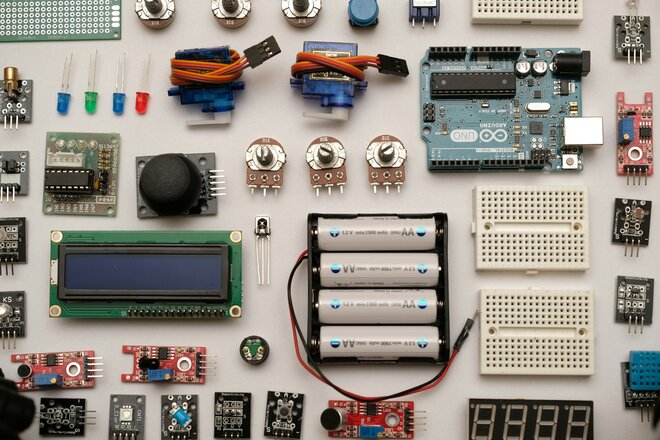
We demand an exemption, a consolidated tariff category, or a flat-fee cap for private (B2C) imports of electronic, mechanical, and general prototyping components into the European Union. The current regulation chhttps://taxation-customs.ec.europa.eu/news/guidance-and-legal-text-temporary-flat-fee-low-value-imports-which-will-apply-until-1-july-2028-2026-06-08_enarging €3 per individual HS-code category is unintentionally destroying STEM education, the broader maker community (including 3D printing and robotics), and early-stage hardware innovation in Europe.
Reason
Since July 1, 2026, the EU has introduced a flat €3 fee per product category (defined by the 6-digit HS code) on B2C imports. While this was designed to stop the flood of cheap fast-fashion and plastic goods, it accidentally penalizes the entire European hardware, robotics, and maker ecosystem.
To understand the absurdity of this law, imagine buying a €15 Lego car from abroad. Under this new regulation, customs now says: "We charge a €3 fee for the red bricks, €3 for the blue bricks, €3 for the tires, and €3 for the axles." You suddenly pay €12 in processing fees for a €15 toy. This is exactly what is happening to prototyping components, from microcontrollers to ball bearings.
Building a simple automated mechanism (like a smart blind actuator or a small robot) requires a mix of highly specialized electronic and mechanical parts that are often completely unavailable from B2C distributors within the EU. We are forced to buy from international specialized distributors. A standard order for one simple prototype now triggers a catastrophic chain of fees based on HS codes.
For a bag of mixed parts worth maybe €15, a student or hobbyist is now charged €24 in flat customs fees alone. Together with VAT, a €15 educational project now costs over €40. This is a 200%+ tax on innovation.
The Impact on Europe
- Killing STEM Education: Students, apprentices, and hobbyists can no longer afford to build, learn, and prototype across disciplines like electronics, mechanics, and robotics.
- Stopping Innovation: Hardware startups begin in home labs. Cross-disciplinary prototyping has now become financially ruinous for private individuals in the EU.
- No local Alternatives: We cannot "buy local" because the vast inventories of highly specialized prototyping components simply do not exist in the EU B2C market. We are being penalized for something we cannot avoid.
We urge the EU to introduce an amendment to this regulation to save European hardware innovation.
Thank you so much for your support, Michael Deutschl, Bärnbach
Share petition
Petition details
Petition started:
07/16/2026
Collection ends:
01/15/2027
Region:
European Union
Topic:
Taxes
This petition has been translated into the following languages
Translate this petition now
Add a new language versionWhy people sign
Tools for the spreading of the petition.
You have your own website, a blog or an entire web portal? Become an advocate and multiplier for this petition. We have the banners, widgets and API (interface) to integrate on your pages. To the tools
Share petition
Petition statistics
Supporters by country
| Country | number | quorum (?) |
|---|---|---|
| Deutschland | 54 | 0.07% |
| Österreich | 41 | 0.29% |
| Polska | 41 | 0.11% |
| Italia | 28 | 0.05% |
Signature distribution


This has been the cause of many people i know and me putting some open source projects on hold indefinitely as the costs explode quickly. especially when sourcing components for PCB prototyping this becomes a problem. Designs with hundreds of hours spent on them have been designed around parts availability and costs from a chinese components distributor. this makes it impossible to realise with local distributors. Such a design may easily include a bill of materials with over 200 entries. This means that the project with original BOM cost of 70€ rises to 670€. With these numbers it is important to consider that system design is an iterative process, where many iterations, each fixing some issues may be required until you arrive at a functional product, so the real cost of development might be even higher. These are real numbers from one of my projects. A redesign around components available from local distributors would take hundreds of hours. and result in BOM costs still in excess of 200€. I personally believe that this is a major hindrance in people learning about electronics and mechanical design. It is important to realise that many innovative startups form as a result of personal projects demonstrating feasibility of a certain technical system and raising the barrier to entry to experimentation like that may negatively influence equal chances and social mobility, innovation and in the long term even the economical standing of the EU in key technologies. As the vast majority of the components in question aren't even produced within the EU, the matter of unfair competition to local component producers loses significance. Electronics distributors within the EU still have a strong economic standing as they can deliver much better support and low turn-around times to projects that require quick access to the components these local distributors may have in stock and primarily generate profit from B2B sales which are not targeted by the fees to begin with.