новини
-
Changes to the petition
на 19.05.2026
Петицията е адресирана до: Ministry of natural resources and spatial planning, Ministry of Culture
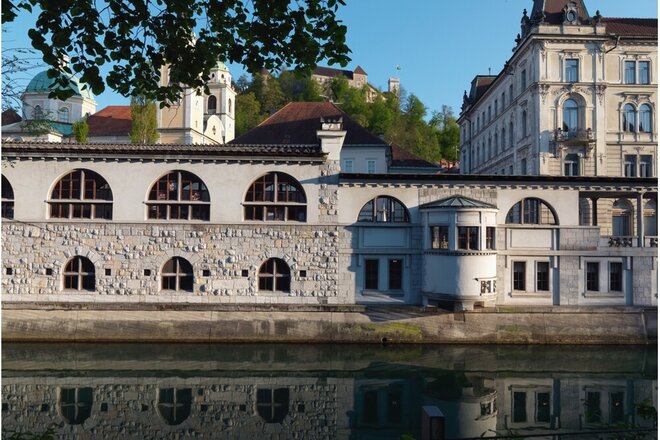
Recently, public attention has turned to the Ministry of Natural Resources and Spatial Planning's decision to approve the construction of an underground car park beneath Vodnik Square in Ljubljana. Notably, the area has been on the UNESCO World Heritage List since 2021, thanks in part to Plečnik’s Covered Market (photo credits: © Museum and Galleries of Ljubljana. Source: Nomination File).The planned construction also directly threatens unique national monuments, including St. Nicholas Cathedral and the Seminary Palace, as well as the architectural heritage of the parish house, the renowned Maher House, and a row of medieval townhouses along the southern edge of Vodnik Square. The project would also completely destroy the Vodnik Square archaeological site, including the tombs of Ljubljana’s noble families in the former cemetery.
In preparing for construction, including the World Heritage Impact Assessment, the investor—the City of Ljubljana—and the administrative authority, in this case the Ministry of Natural Resources and Spatial Planning, managed the entire process in a non-transparent and exclusionary manner. Numerous concerns raised by civil society and well-founded opinions from the expert community were completely disregarded, even though member states of the UNESCO World Heritage Convention are required to ensure public participation in the management of such sites. UNESCO’s Operational Guidelines for the Implementation of the World Heritage Convention clearly require Member States to respect heritage rights in the nomination, management, monitoring, and protection of World Heritage sites, as well as in all measures affecting sites under their jurisdiction. States are further obliged to ensure meaningful public participation in line with the rights of heritage communities. In the case of St. Nicholas Cathedral and the Seminary Palace, the heritage community extends far beyond the local context, encompassing the broader Slovenian Christian community, as Archbishop Stanislav Zore has repeatedly emphasised.
We further emphasise that the primary purpose of cooperation with communities is to strengthen public influence over heritage processes, policies, and programmes essential to the protection of World Heritage and other forms of cultural heritage. UNESCO documents and those of other international bodies active in the field of heritage emphasise the role of public participation, grounded in the recognition of the right to heritage—a right that is, after all, enshrined in our Cultural Heritage Protection Act (ZVKD-1), which sets out requirements for the protection of heritage as a constitutional category defined in Articles 5 and 73 of the Constitution of the Republic of Slovenia. The right to heritage is further rooted in the United Nations Universal Declaration of Human Rights (1948) and the International Covenant on Economic, Social and Cultural Rights (ICESCR, 1966). As a full member of the United Nations, the Republic of Slovenia is committed to upholding and protecting these rights.
The signatories of this petition emphasise that the impact assessment of Plečnik’s World Heritage site and the issuance of the integrated permit for the construction of the underground car park were not carried out in accordance with the standards of the UNESCO World Heritage Committee. Particular concern arises from the apparent disregard for the Convention on Access to Information, Public Participation in Decision-Making and Access to Justice in Environmental Matters (Aarhus Convention, 2000), which Slovenia ratified in 2004. Under this convention, cultural sites and built objects are explicitly recognised as integral components of the environment — a definition that unquestionably applies to the architectural and archaeological site on Vodnik Square.
The threat to Plečnik’s heritage posed by the planned construction of an underground car park demonstrates that, in practice, the Republic of Slovenia deliberately disregards the community’s right to heritage, even in important cases such as the protection of World Heritage sites of outstanding universal value. It must be emphasised that public participation is not limited to the nomination process for inscription on the World Heritage List. The States Parties to the World Heritage Convention are also required to ensure this in all subsequent decisions that may affect the preservation of the site’s outstanding universal values, and to inform UNESCO in a timely manner before such decisions are taken. The importance of involving the public — and especially the heritage rights holders — at all stages of World Heritage impact assessment is explicitly highlighted in the Guidance and Toolkit for Impact Assessments in a World Heritage Context, whose Slovenian translation was provided by the Ministry of Culture and the Slovenian National Commission for UNESCO (UNESCO, ICCROM, ICOMOS, IUCN, 2025. Priročnik in orodja za presojo vplivov v kontekstu svetovne dediščine).
According to UNESCO, rights holders, local communities, and other stakeholders play a decisive role in assessing impacts on World Heritage sites. According to publicly available information, the City of Ljubljana, acting as the investor, commissioned a study to assess the impact of the planned underground car park on the outstanding universal values of Plečnik’s World Heritage site, in accordance with the Guidance and Toolkit for Impact Assessments in a World Heritage Context, published by UNESCO in 2023 and translated into Slovenian last year. As the study's funder, the investor was in a position to influence both the selection of the assessment contractor and the conclusions summarised in the report. At the same time, the municipality commissioned a legal opinion, whose conclusions likewise appear tailored to the investor's interests. According to this opinion, impacts on World Heritage sites allegedly carry no legal consequences under the Slovenian legal system, since such assessment procedures are not explicitly regulated by national legislation. However, it overlooks the fact that, by notifying the Convention for the Protection of the World Cultural and Natural Heritage in 1992, the Republic of Slovenia assumed responsibility from the SFRY to ensure, in accordance with Article 4 of the Convention, the full protection of world and other heritage on its territory, and that an independent impact assessment of such heritage is one of the necessary protective measures.
We conclude that the Ministry of Culture, as the authority responsible for safeguarding World Cultural Heritage in Slovenia, is failing to fulfil its obligations by not ensuring adequate protection for Plečnik’s World Heritage site in relation to the planned underground car park. In doing so, it indirectly supports the City of Ljubljana’s insistence on proceeding with the project despite the potential consequences, which could include the loss of World Heritage status for Plečnik’s Ljubljana as a whole or, at the very least, its inclusion on the UNESCO List of World Heritage in Danger.
Respect for unique cultural heritage and the dignity of the deceased must remain fundamental values that guide the public interest. In such controversial cases, the public interest must prevail over investors' interests. The importance of Plečnik’s Central Market extends far beyond the question of placing a car park in the very heart of the city centre, which in itself makes no sense. The planned intervention raises broader questions about our relationship to space, history, sustainability, and collective memory in the heart of the capital. Particularly troubling are the lack of transparency in procedures, the exclusion of experts and the general public from decision-making on interventions within the World Heritage site, and the lack of accountability among duty-bearers. At its core, this is an ethical question: how much are we willing to sacrifice in the name of infrastructural and economic interests, and whether we are still capable of recognising the irreplaceable value of cultural heritage once it is lost forever.
The signatories of this petition support ongoing public efforts to preserve Plečnik’s heritage, the archaeological site, and the cultural monuments within the market area, and call upon the ministry that issued the integrated building permit for the underground car park at Vodnik Square to revoke it without delay.
The signatories therefore demand:
- the immediate revocation of the integrated building permit for the underground car park at Vodnik Square,
- an independent and internationally credible assessment of the impacts on the World Heritage site,
- and the involvement of the expert and the interested public in further decision-making processes.
At the same time, we urge experts and the general public to sign the petition in as large a number as possible, thereby actively and consciously contributing to the preservation of Ljubljana Market as part of Slovenia’s and the world’s shared cultural heritage. We will bring the petition to the attention of all decision-makers in Slovenia and to UNESCO headquarters in Paris.
Петицията е започната:
18.05.2026
Колекцията приключва:
17.11.2026 г.
Регион:
Словения
категория:
Култура
Имате ли собствен уебсайт, блог или цял уеб портал? Станете застъпник и разпространител на тази петиция. Ние разполагаме с банерите, джаджите и API (интерфейса), за да ги интегрираме във вашите сайтове. Към инструментите



Ni pomembna Zame. Pomembna je za vse nas na tem Planetu Zemlja. Narava nam izstavlja račun.